A helping hand for the harvest
Australian Bulk Handling Review magazine
Stackers
Throughout 2025, Kilic Engineering (KE) underwent a serious growth spurt. Business was booming, but to keep up with demand, expansion was necessary.
The company added around 1750m2 to its factory footprint, bringing the total size of the premises to 3500m2. KE general manager Craig Dennis said the expansion opened opportunities to refine new developments for its products.
“By reorganising the fabrication and production facilities, we can now take advantage of improved productivity throughout the design and manufacturing process,” he said. “It’s allowed us to develop a new machine that has gone from concept to reality within nine to ten months, featuring engineering updates and new technologies.”
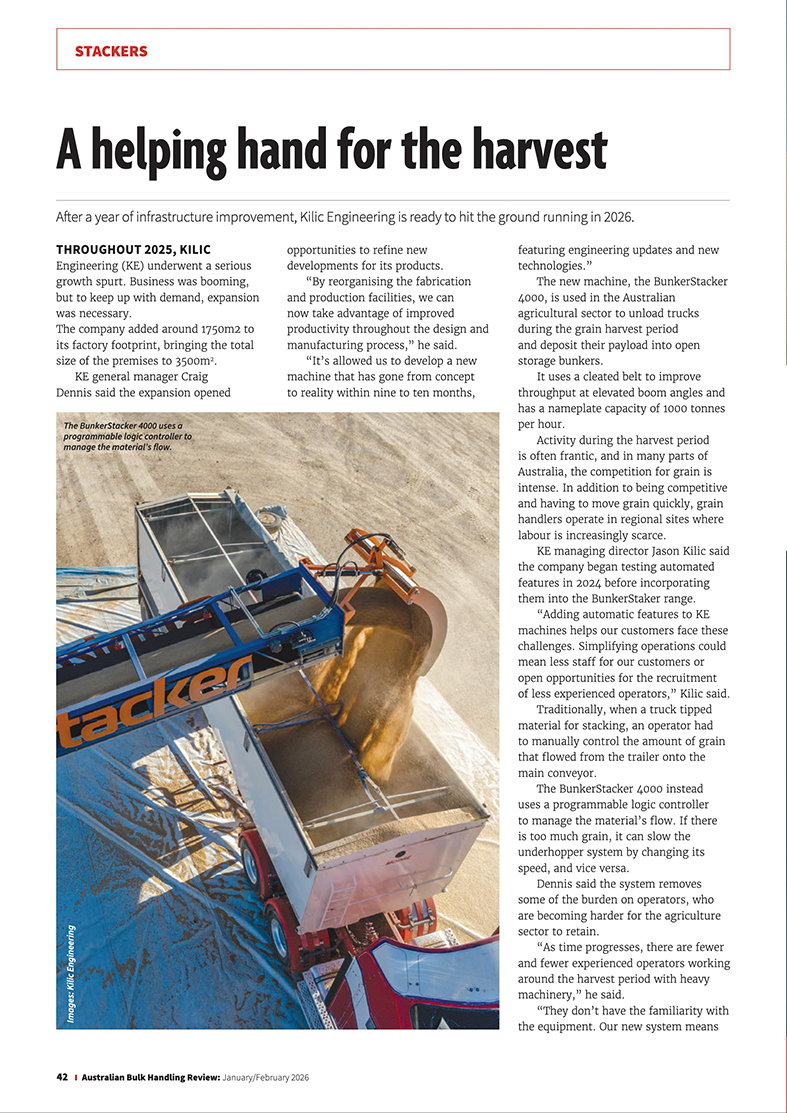
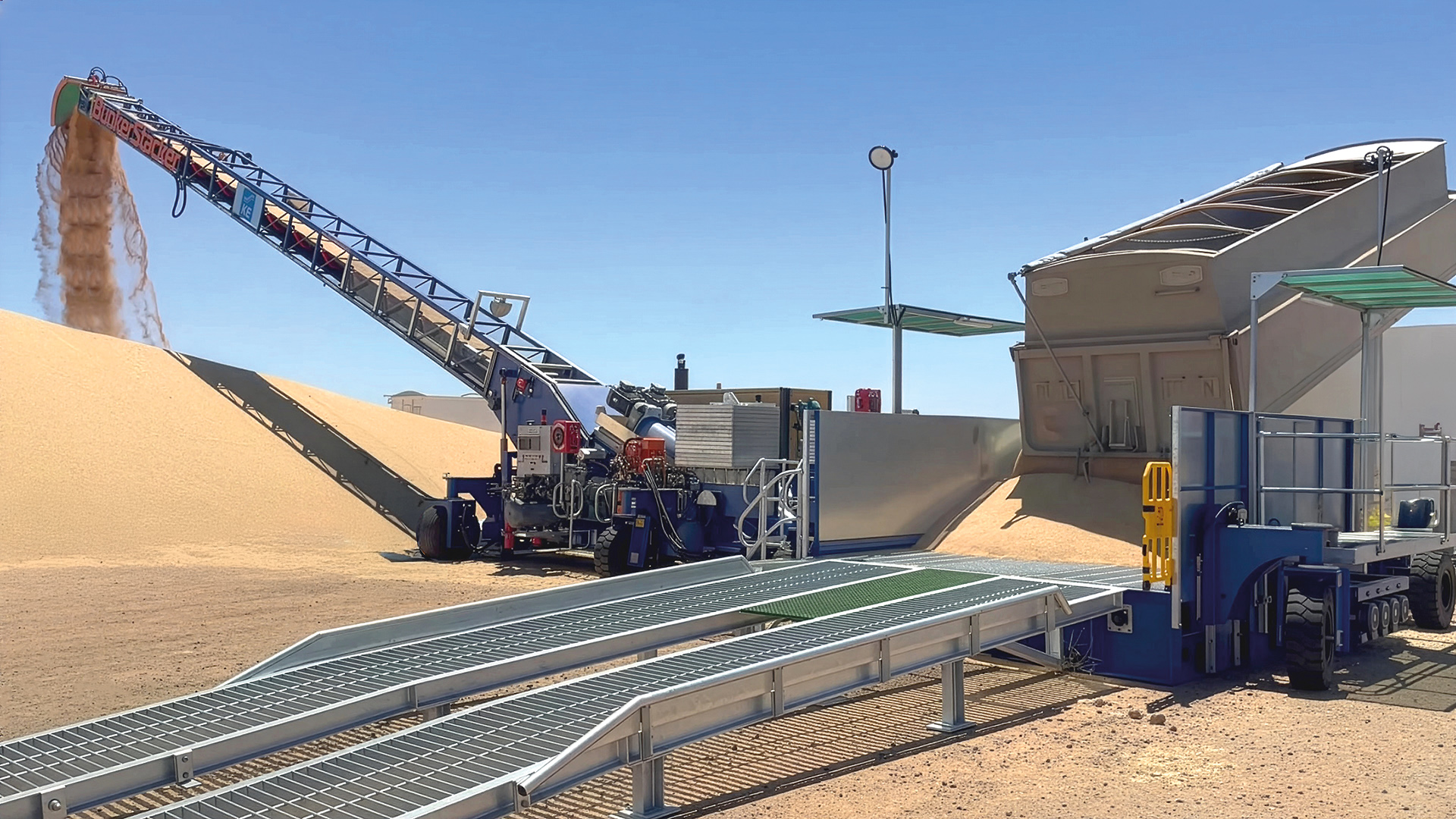
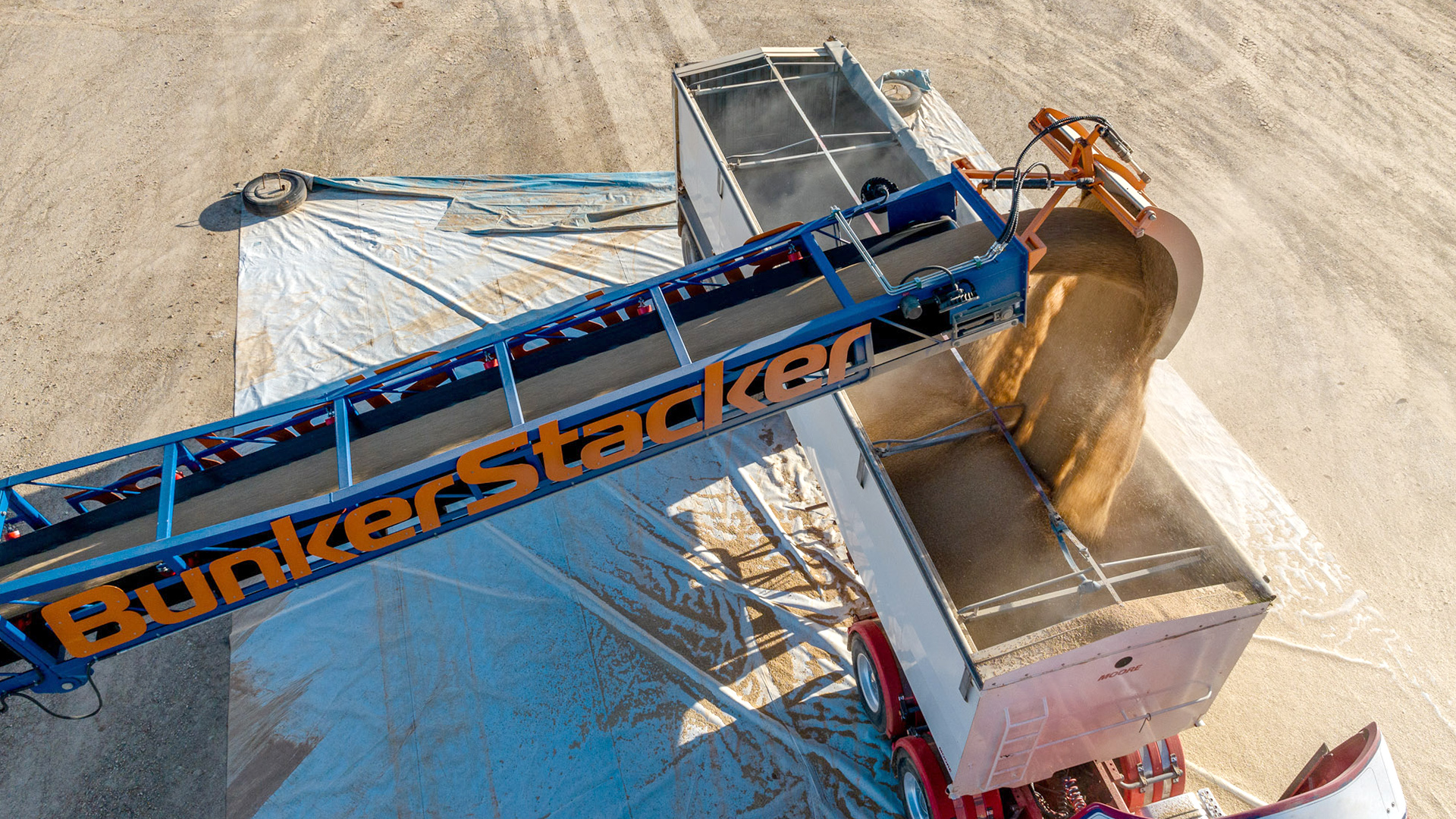
The new machine, the BunkerStacker 4000, is used in the Australian agricultural sector to unload trucks during the grain harvest period and deposit their payload into open storage bunkers. It uses a cleated belt to improve throughput at elevated boom angles and has a nameplate capacity of 1000 tonnes per hour. Activity during the harvest period is often frantic, and in many parts of Australia, the competition for grain is intense. In addition to being competitive and having to move grain quickly, grain handlers operate in regional sites where labour is increasingly scarce.
“Adding automatic features to KE machines helps our customers face these challenges. Simplifying operations could mean less staff for our customers or open opportunities for the recruitment of less experienced operators,” Kilic said. Traditionally, when a truck tipped material for stacking, an operator had to manually control the amount of grain that flowed from the trailer onto the main conveyor.
The BunkerStacker 4000 instead uses a programmable logic controller to manage the material’s flow. If there is too much grain, it can slow the underhopper system by changing its speed, and vice versa. Dennis said the system removes some of the burden on operators, who are becoming harder for the agriculture sector to retain. “As time progresses, there are fewer and fewer experienced operators working around the harvest period with heavy machinery,” he said. “They don’t have the familiarity with the equipment. Our new system means they can get the most out of the machine at the busiest time of year.”
The company plans to roll out an equipment hire system as an alternative to help organisations reduce capital expenditure. Dennis said there is a demand for extra support during the hectic harvest season.
“It might be capital constraint, smaller operators trying to rapidly grow, or a big player that had a better harvest than they expected – there are many reasons why having an affordable stacjing solution is proving to be popular,” he said. “We’re looking at redeveloping one of our existing designs to maximise tonnes while remaining straightforward to transport. “We’re already getting some good feedback from operators and truck drivers. This year is shaping up to be a big one for KE.”
—
Australian Bulk Handling Review, January/February 2026