Lifelong lessons
Australian Bulk Handling Review magazine
ABHR finds out what makes Kilic Engineering’s fabrication process unique.
Across almost 30 years, there is one lesson that stands out most to Adam Schmitt: Never assume anything.
Schmitt began his career as a boilermaker in South Australia, designing and building tractor cabins. He spent many hours in the Mitsubishi factory in Lonsdale, undertaking maintenance work over Christmas during shutdowns. He took these skills to a structural steel company, where he helped execute high profile projects around Adelaide, including supplying steelwork for the Adelaide Airport and Adelaide Oval redevelopments.
“I was thrown into the deep end and learned a lot,” he told Quarry. “The biggest lesson I learned was that a lot of things can go wrong when you make assumptions. “If you start making assumptions and don’t get the facts right, chances are that something has gone wrong. “That lesson has stayed with me forever. If there’s ever something I don’t understand, I don’t make assumptions; I go get the answers from whoever I need to.”
Schmitt has brought this approach to Kilic Engineering (KE), where he has worked as a project delivery manager for nearly a decade. KE is a diverse mechanical engineering company based in Adelaide, which sells products across the globe. Owned by the Kilic family since 1973, the company specialises in designing, manufacturing, and installing a wide range of conveyors, material handling systems, chute work, and structural elements.
Schmitt said the company takes a unique approach to manufacturing, preferring to fabricate in-house as much as possible. “A lot of manufacturers, when they make a weldment or piece of steel, will usually send it to a painter or surface treater,” he said.
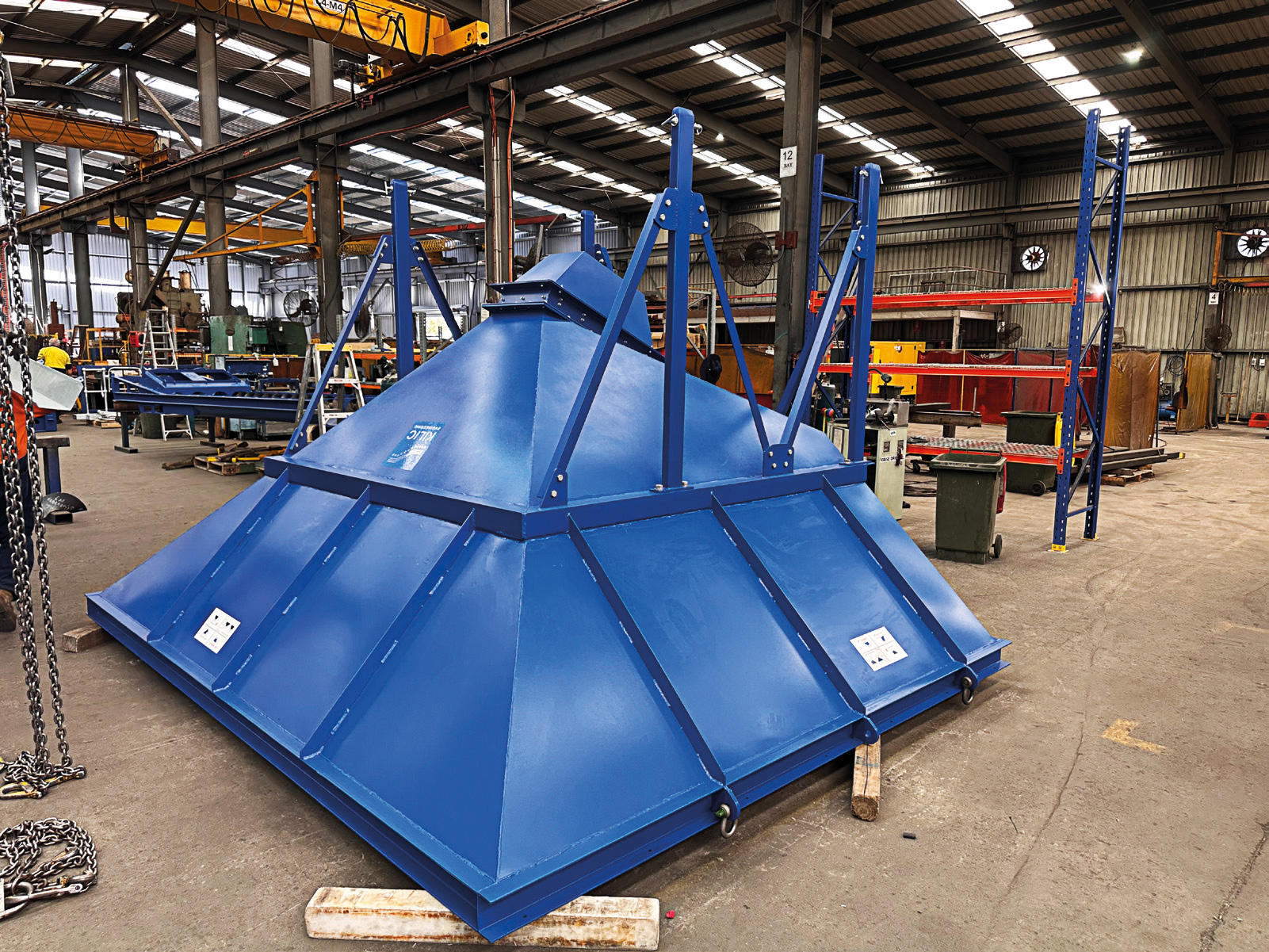
“From there, it will be dispatched to wherever it needs to go, usually some sort of site. For us, whatever our team fabricates and welds in the workshop always comes back to the workshop to be assembled.”
Because KE is a mechanical engineering business, fabrication is only part of the process. The company also needs to confirm that whatever it fabricates will work alongside the hydraulic motors, gears, and electrical componentry. By keeping as much of the fabrication process within its own workshop, KE’s team can ensure that everything is guaranteed to fit and work as expected on site. Schmitt said the company’s fabrication capacity is broad.
“We build bunker stacker machines, but we also do chute work, hoppers and platework. A lot of the chutes we have built use light gauge steel, but also, we can make larger, heavier sections, like hoppers” he said. “We also design and manufacture platforms, handrails, stairs, and a lot of bespoke steel items.”
“We can also supply labour and manpower to other companies that need help or assistance with fabrication.”
The company has the skills to support unconventional projects, including an oversized sign for a football oval. That project saw KE deliver a sign that was beyond what could be legally permitted for road transport. While it was being fabricated, the company needed to devise a way to get it to site. The solution was to work with a transport company to use a precast panel trailer which could stand the sign on an angle, bringing it into the legally required width for road transport. Schmitt said close collaboration with stakeholders is an important part of the delivery process.
“When we receive a job from the customer, it gets broken down into a scope of work which is passed throughout the company. It outlines everything that’s been ordered by the customer, and our mechanical engineers and I make sure that everything the customer has asked for is executed accordingly,” he said.
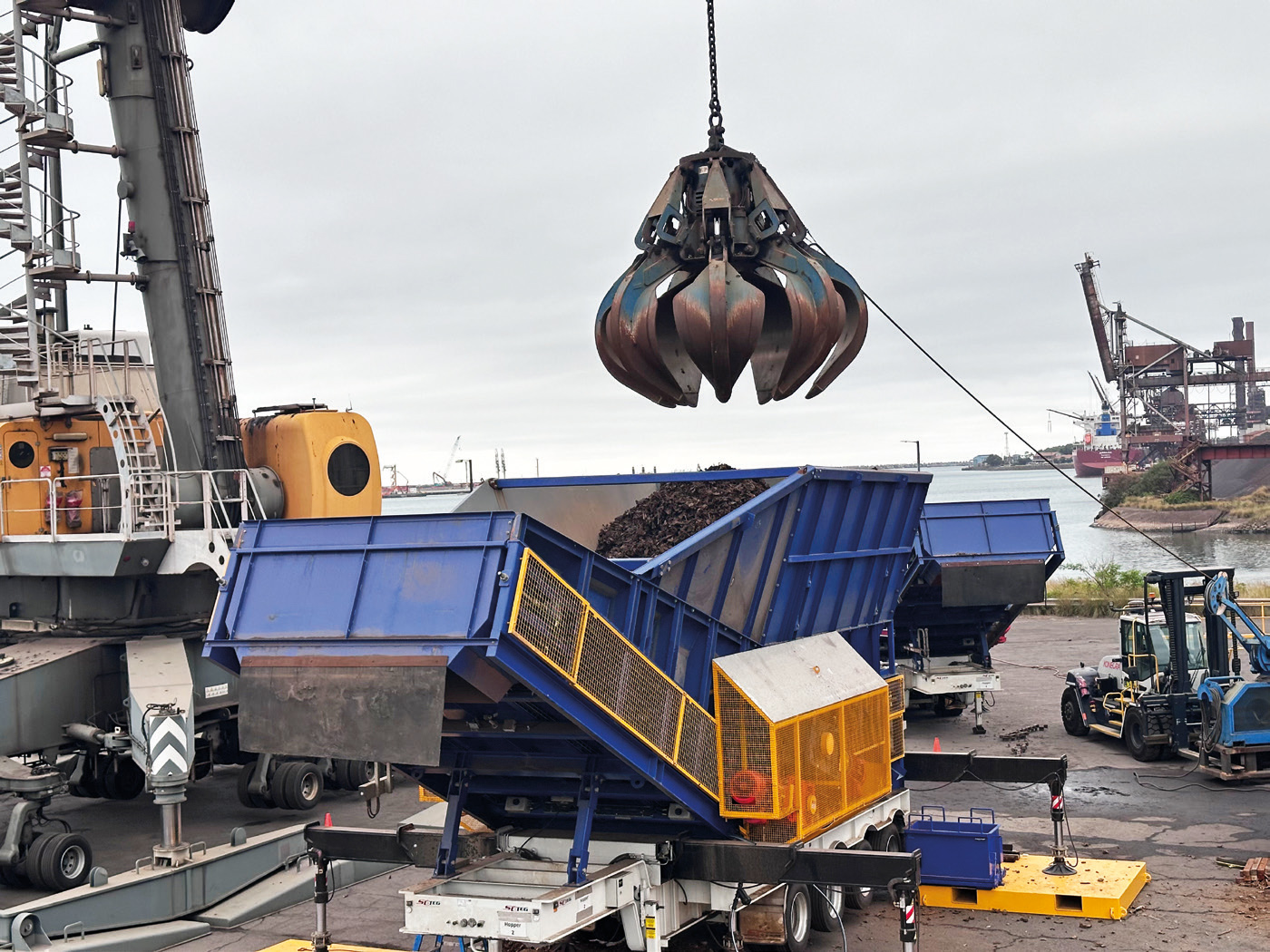
“Once the job has been shared across the business, we benefit from a broad knowledge pool. We also provide constant feedback with our customers, sharing photos and videos, so they know where the project is at. Sometimes, if they’re local, we also invite them into the workshop so we can show them, face-to-face, what we’ve been doing.”
One of the challenges facing Australia’s manufacturers is finding skilled labour. KE has taken a proactive approach, starting an initiative with trade schools to take on students and offering apprenticeships to the next generation of boilermakers. Existing employees are also offered the chance to take additional training at nearby TAFEs, learning specific welding skills or any other techniques that customers might require.
Schmitt said customer feedback has been glowing. “Our customers find us an easy company to work with,” he said. “We work with integrity, we’re safe on site, and we act in a professional manner.”
—
Australian Bulk Handling Review, September/October 2026
Click on the image to view the original article as a PDF.